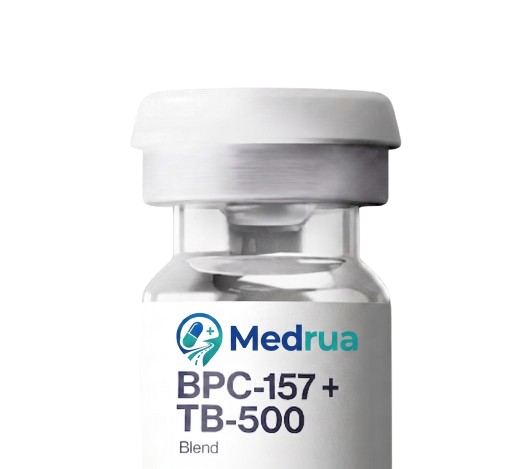
BPC-157 + TB-500
Research Use Only
All products are intended solely for laboratory research and are not for human or animal consumption. By purchasing, the buyer agrees to use these products in compliance with all applicable laws.
BPC-157 + TB-500 Overview
BPC-157 + TB-500 is a research blend combining two widely studied peptides. BPC-157 is a synthetic pentadecapeptide derived from a protein fragment identified in gastric tissue, while TB-500 is a synthetic fragment related to Thymosin Beta-4. Together they are studied in experimental models of structural remodeling, vascular formation, and cellular migration.
History
Both peptides were first characterized in cytoprotective and regenerative research programs. BPC-157 emerged from studies of gastric juice proteins, and TB-500 from work on the actin-binding protein Thymosin Beta-4. The blend is used in research exploring complementary roles in tissue integrity and recovery pathways.
Research Findings
The blend has been explored in structural, vascular, and cellular research models, with reported roles in collagen regulation, extracellular matrix remodeling, angiogenesis, and cell migration. The combination is of interest where complementary signaling across multiple pathways is studied.
Key Areas of Research:
- Structural: matrix, tissue, repair signaling
- Vascular: angiogenesis, nitric oxide, signaling
- Cellular: migration, viability, proliferation
- Systemic: pathway dynamics, biological resilience
References
- Synthesis & Characterization. Solid-phase peptide synthesis, purification, and analytical confirmation of identity and purity.
- Preclinical Research. Reported activity across structural, vascular, and systemic models in controlled experimental settings.
- Stability Studies. Lyophilized stability and reconstitution behavior under controlled cold-chain storage.
- Analytical Verification. Third-party HPLC and mass-spectrometry verification of mass, identity, and purity.